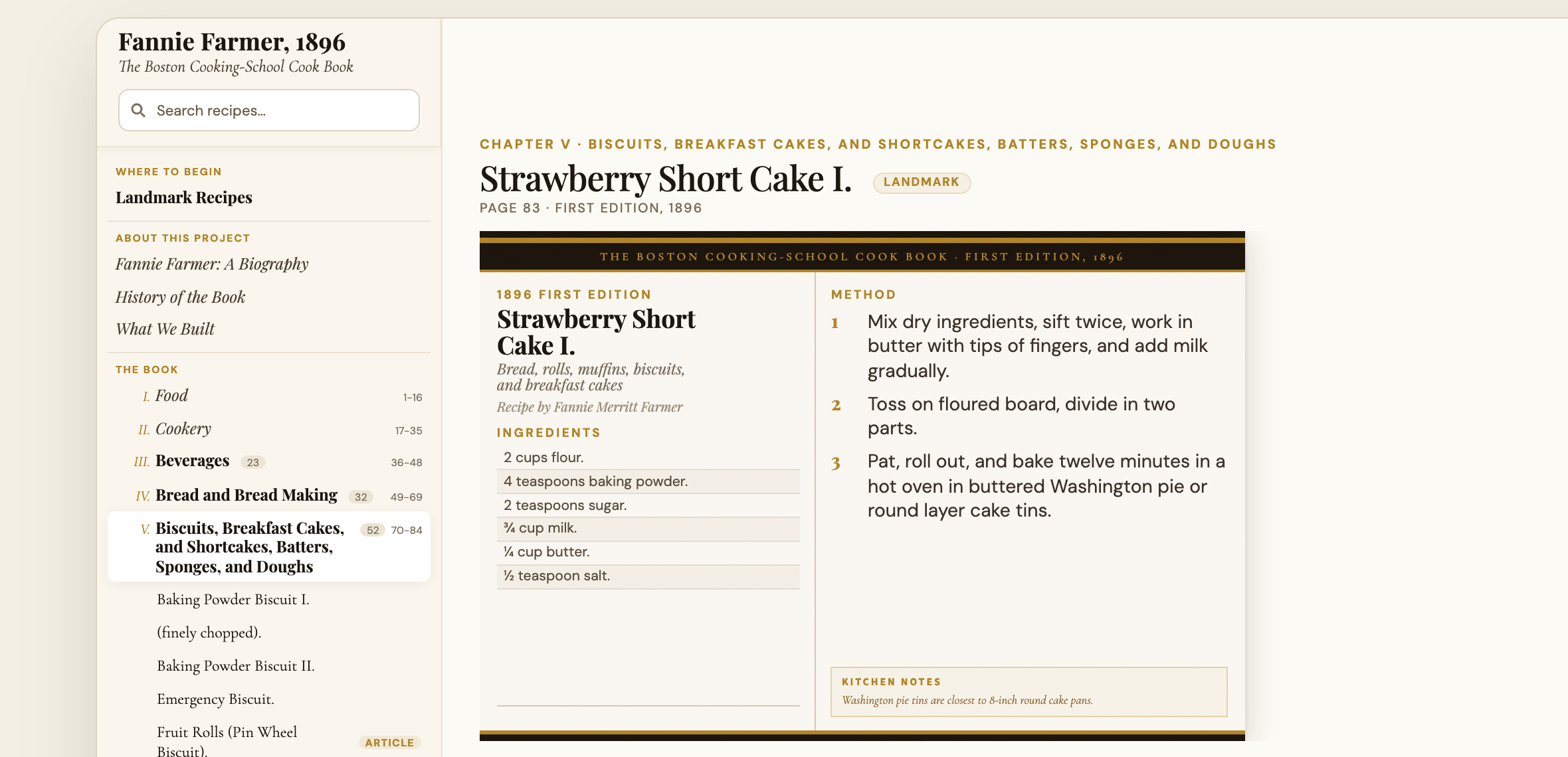
Strawberry Short Cake I.
A compact example of how a source page can become a usable card while the 1896 wording stays visible.
Read recipePage 122 of the 1896 edition packs three recipes onto a single page. The text runs together, cross-references point elsewhere in the book, and nothing separates ingredients from instructions. A scan preserves the page. The question is how to make it usable without losing what makes it historical.
The goal is to let you move from the source page to a working recipe card and always know what belongs to 1896 and what we added.
The 1896 book packs several recipes onto a single page — brief headings, text that runs into the next recipe, cross-references to preparations elsewhere in the volume. In a flat scan, the logic is all there, but it asks work of the reader.
Raw transcription doesn’t solve it. OCR blurs titles, collapses the boundary between ingredients and method, and misses that one recipe depends on another fifty pages away. You end up with searchable text that nobody wants to cook from.
So the recipe card is the bridge. But the card can’t quietly rewrite Farmer’s words into modern food-blog prose — that would erase the thing we’re trying to preserve. Instead, Farmer’s 1896 wording stays as the source text. The source page stays linked. And anything we add — Kitchen Notes, cross-reference links, navigation — is visibly separate, so you always know what’s hers and what’s ours.
The rule: Farmer’s words stay exactly as she wrote them. Everything we add is marked as an aid, never folded into the original as though it had always been there.
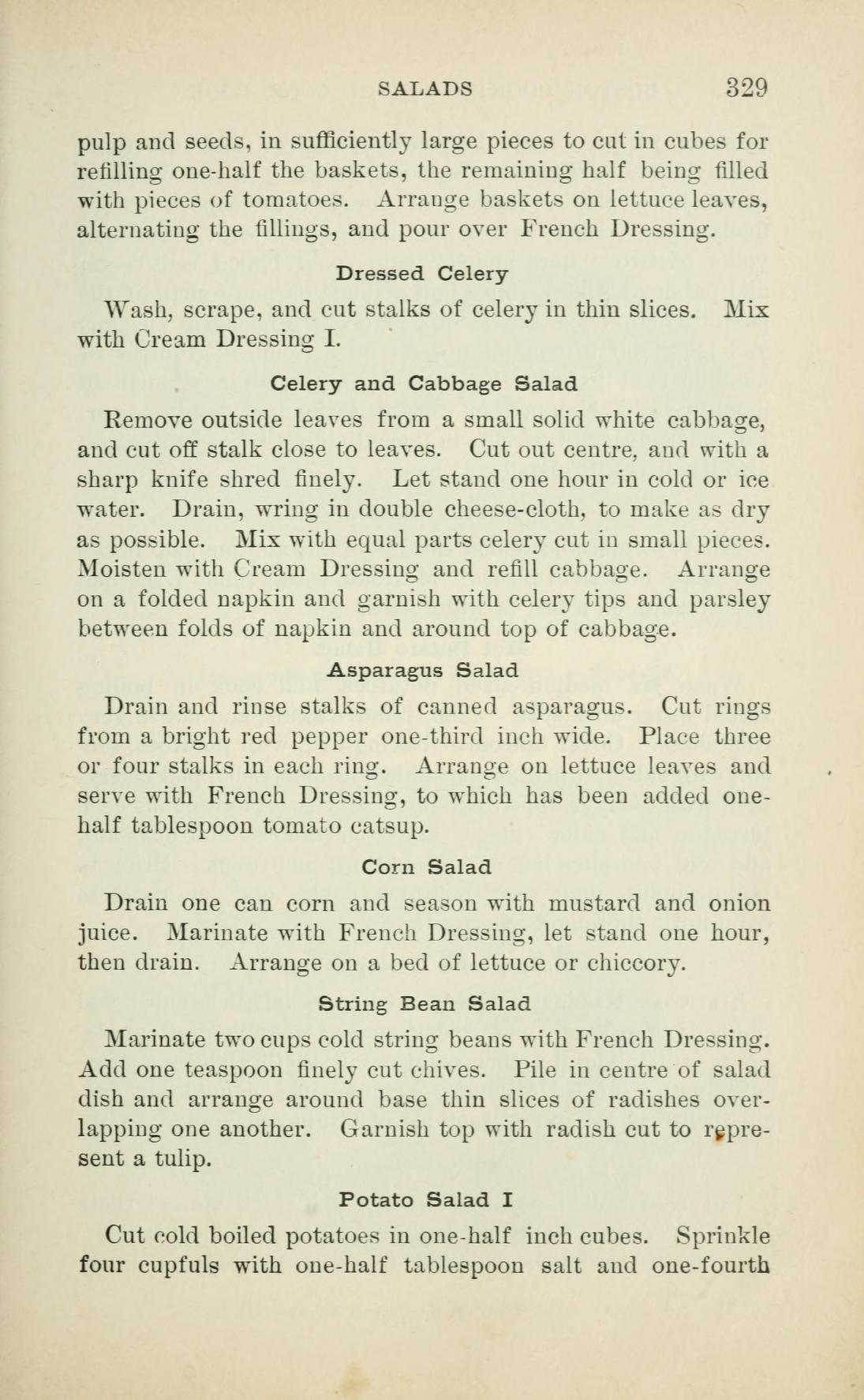
Take Strawberry Short Cake I. on page 122. The scan shows the recipe wedged between two others, with no visual separation. The first job is anchoring the recipe to that verified source page — every card in the collection links back to the scan so you can check our work.
Next, the transcription gets cleaned against the source. Not rewritten — cleaned. We recover Farmer’s wording, punctuation, and sequence rather than translating her into a new voice. If she wrote "one-third cup of butter," we keep "one-third cup of butter," not "⅓ cup butter."
Then the internal references. This recipe calls for biscuit dough from an earlier chapter. That link stays live in the card rather than being quietly expanded or dropped. The reader can follow it the way Farmer intended.
Finally, the card layout separates ingredients from method for practical use, but the source text and source-page link stay available. Kitchen Notes go in a separate box — never mixed into the original wording. You can read the card as a modern cook or inspect it as a historical document, and the interface doesn’t blur the line between the two.
The principle is simple: original recipe titles, historical phrasing, punctuation, cross-references, and source-page links are preserved exactly. Card layout, section navigation, Kitchen Notes, and cross-reference links are ours — clearly marked and never blended into Farmer’s text.
Some people want a recipe they can cook from right now. Others want to compare it against the original page or follow the book’s cross-references. The collection supports both.
A compact example of how a source page can become a usable card while the 1896 wording stays visible.
Read recipeA Boston staple — steamed, not baked — with Farmer's original mould instructions and household detail kept intact.
Read recipeA well-known roll written as a repeatable home formula, with shaping, second rise, and oven timing made legible to a reader outside the original kitchen.
Read recipeThe full collection keeps recipes, scanned pages, menus, and reference chapters together — preservation and usability in one place.